I've been in China for about three months now, started the language course two months ago, and began to collect my first language-related defining moments only a couple of weeks ago. Is it too late?
It's not that I don't ask myself if I'm doing something wrong or what I should change, but despite some healthy self-criticism, I somehow struggle to make the whole process of learning Mandarin faster.
I have just begun to learn the characters, so it's quite hard to notice any improvement in my writing and reading already: I might know about 300 and they are 5000, I need to be patient, I'll be able to read the newspaper in about 3000 characters.
I'm getting to grips with the grammar, not too difficult, but still very different from Western languages structures. I know how it works, I've gone through grammar learning before, so I know it takes time.
What I'm finding more challenging, however, is the pronunciation, both when I speak and when I listen.
Speaking is not always easy because I miss many words. However, I try to follow the advice of our laoshi and talk to anybody I meet, but even when I'm happy I for once know the right expression, my excitement is very short-lived: people simply don't understand me.
On the other hand, when Chinese people speak (very fast), my first reaction is panic. When finally my brain starts functioning, it's already too late, the person has left.
I can never forget my first defining moment language-wise: after hopping on a cab, I told the driver where I wanted to go and he understood without me having to show him the place written in Han zi (Chinese characters). I know it might seem pretty straightforward, but it's not: you get one tone wrong and they'll drive you to the other side of the city.
I was so excited I managed to make the driver understand me for the first time that at the end of the drive I forgot how to tell him where to stop and I issued a ridiculous "zhe ge, zhe ge!" that corresponds to the English "this one, this one!", very little appropriate to the situation.
Since then, I developed a greater self-confidence and I have no problems taking a taxi anymore. Actually now probably I say it so well that drivers feel compelled to strike up a conversation with me and inevitably end up mocking my accent when they realise my only answer is "Ting bu dong" ("I don't understand").
So, since most of my attempts to communicate so far have ended up into a stalemate, I've decided to make some more effort on this. My next steps will include:
1. Watching tv every day even if I understand next to nothing.
2. Getting a language partner for conversation.
3. Going out more often and strike up a conversation with anybody, especially taxi drivers that are proving very talkative.
I hope my Chinese will improve faster with such a full immersion learning process but no worries, next post will still be in English!
In Shanghai, discovering the Tea Art
It's been a while since I have updated my travel blog. My new Chinese life is keeping me very busy, especially the language course, that is becoming increasingly challenging. Of course, I'm not only studying. In fact, I've also been sightseeing in and out of Shanghai. In my quest for authentic traditions, I ended up delving into a local tea market.
If you think the national sport in China is Kung Fu, think again. Last Sunday, in fact, I went tea fighting, nonetheless.
I thought I was simply going to buy tea, but I sensed it wasn't that obvious when my friend told me: "Tasting tea is an art, not simple drinking."
I wanted to discover China's most intimate traditions, didn't I? Well, the Tea Art is one of them. Ancestral, fascinating, magical. To the extent that buying tea in a normal supermarket in China is almost betraying its roots and missing something essential of its culture.
Writes Yizhou Wu: "There are many legends and folklores about the tea". And this is only the beginning of the journey into this intriguing tradition that has been an important element in the Chinese society for thousands of years, throughout royal dinasties, revolutions and wars.
China has been repeatedly criticised for having completely lost its traditions and connection with its past. Although I find this statement very simplistic in the attempt to define a so complex culture such as the Chinese, I agree that much of their identity is being sacrificed for the sake of modernity, and often the worst aspects of globalisation are being adopted very easily.
However, one of the aspects of the ancient society that Chinese people are not ready to give up is indeed the Tea Art.
The most widespread legend about the tea sees Shennong, believed to have written the earliest book on Chinese pharmacology, as the main character. According to the tale, he tasted all kinds of plants and water with the aim to make people aware of what was edible and what wasn't.
Finally, one day he was poisoned by 72 different plants and found relief only tasting the leaves of tea trees. Although that book wasn't written by Shennong, who is himself a legendary figure, it's an important account of the beginning of the tea tradition.
According to the Chinese tradition, the tea plays an important role in the Cosmo. This is how Yu Lu in his The Classic of Tea puts it:
This gives an idea of how important the tea is, considered not merely a drink, but a plant with medicinal properties that plays a central role in the society itself. During business meetings, meals or while welcoming guests, any occasion sees the ritual of the tea happen.
At the tea market, every little shop appear as cosy sitting rooms in which customers are invited to sit and taste all kinds of tea and infusion before deciding if and/or which to buy.
Only staring at the ritual is already fascinating. First there's the washing of the tiny cups, then the first water is thrown away after one minute of infusion, and finally the set is ready for serving the beloved drink.
Also the tasting is part of the ritual, during which the seller will explain the characteristics of the tea you are sipping. The first advice they give is not to swallow immediately, so that you are able to fully understand the flavour and what the seller is saying: the origins, the type of land where the herb was harvested, the kind of processing that brought it to be a drink.
According to tradition, the spirit of the tea is aimed at giving peace to the soul. Says Xufeng Wang:
The expert moves of the sellers make the whole experience of purchasing tea so rich that it will feel a shame to simply pick one from the Carrefour shelves next time I want to buy it.
If you think the national sport in China is Kung Fu, think again. Last Sunday, in fact, I went tea fighting, nonetheless.
I thought I was simply going to buy tea, but I sensed it wasn't that obvious when my friend told me: "Tasting tea is an art, not simple drinking."
I wanted to discover China's most intimate traditions, didn't I? Well, the Tea Art is one of them. Ancestral, fascinating, magical. To the extent that buying tea in a normal supermarket in China is almost betraying its roots and missing something essential of its culture.
Writes Yizhou Wu: "There are many legends and folklores about the tea". And this is only the beginning of the journey into this intriguing tradition that has been an important element in the Chinese society for thousands of years, throughout royal dinasties, revolutions and wars.
China has been repeatedly criticised for having completely lost its traditions and connection with its past. Although I find this statement very simplistic in the attempt to define a so complex culture such as the Chinese, I agree that much of their identity is being sacrificed for the sake of modernity, and often the worst aspects of globalisation are being adopted very easily.
However, one of the aspects of the ancient society that Chinese people are not ready to give up is indeed the Tea Art.
The most widespread legend about the tea sees Shennong, believed to have written the earliest book on Chinese pharmacology, as the main character. According to the tale, he tasted all kinds of plants and water with the aim to make people aware of what was edible and what wasn't.
According to the Chinese tradition, the tea plays an important role in the Cosmo. This is how Yu Lu in his The Classic of Tea puts it:
Tea grows on land, that is "earth"; it is brewed in a stove, that is "metal"; it is heated by the burning "fire", which is fuelled by charcoal, which is "wood"; the final tea drink is "water".
The process through which tea changes from being a plant to being a drink is a process of going through the natural process of five elements, metal, wood, water, fire and earth, to reach a state of harmony.
This gives an idea of how important the tea is, considered not merely a drink, but a plant with medicinal properties that plays a central role in the society itself. During business meetings, meals or while welcoming guests, any occasion sees the ritual of the tea happen.
At the tea market, every little shop appear as cosy sitting rooms in which customers are invited to sit and taste all kinds of tea and infusion before deciding if and/or which to buy.
Only staring at the ritual is already fascinating. First there's the washing of the tiny cups, then the first water is thrown away after one minute of infusion, and finally the set is ready for serving the beloved drink.
Also the tasting is part of the ritual, during which the seller will explain the characteristics of the tea you are sipping. The first advice they give is not to swallow immediately, so that you are able to fully understand the flavour and what the seller is saying: the origins, the type of land where the herb was harvested, the kind of processing that brought it to be a drink.
According to tradition, the spirit of the tea is aimed at giving peace to the soul. Says Xufeng Wang:
"Heping (peace) is the spiritual core of Chinese tea. Pinghe (tranquillity) is the outward shape of the peaceful spirit shown by tea drinkers. Heping and pinghe, peace and tranquillity, are interdependent like teeth and lips. Here, peace is a spirit, and also a shape; tranquillity is a shape, and also a spirit."
The expert moves of the sellers make the whole experience of purchasing tea so rich that it will feel a shame to simply pick one from the Carrefour shelves next time I want to buy it.
0
comments
Labels:
Asia,
China,
Chinese culture,
Chinese tea,
Guanyin Tea,
Puer Tea,
traditions
The great walk along the Great Wall of China, with unexpected ending
Going to China and not visiting the Great Wall should be considered a sin. I knew it was impressive, but being actually walking along that piece of history felt really special.
Although the fact that it can be seen from the moon is a myth, the Great Wall is a truly outstanding piece of ancient architecture, a series of walls built between the 5th and the 16th century BC, with the main purpose of protecting the Chinese Empire from the attacks of nomadic tribes.
Our tour began at the Ming Tombs, big complex with the graveyard of the emperors of the Ming Dinasty. Most of the Great Wall was built during this dinasty, and was started under emperor Zhu Yuanzhang who also founded the Dinasty in 1368. The Ming period ended tragically in 1644, when the last emperor, Sizong, hanged himself after strong peasant uprisings headed by Li Zicheng, who managed to defeat imperial forces and break into Beijing.
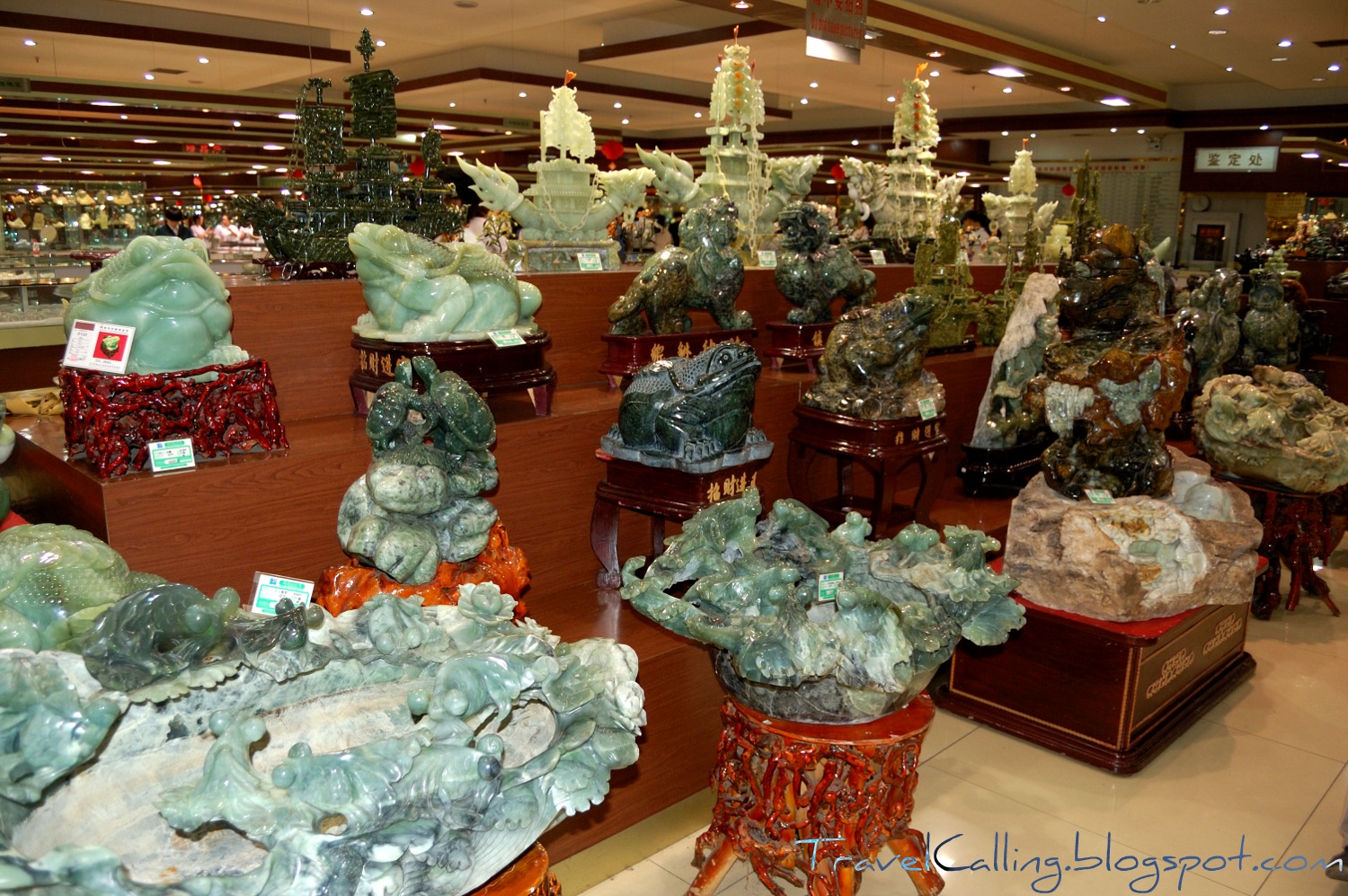
In Changling, we have visited the burial mausoleum of Chengzu, Zhu Di (third emperor of the Ming Dinasty) and empress Xushi, with annexed a museum displaying ancient imperial Chinese tools and jewellery. To stay within the jewellery topic, afterwards we headed to the state-run jade factory, where they work (and sell) all kinds of Chinese jade.
After the jade factory was the turn of Chinese medicine. Or better, a wellbeing-sort-of-spa centre where we were introduced to the fascinating world of natural remedies. Apart from the too touristy atmosphere, the group was starting to get impatient about the Great Wall that, in the itinerary, was left as the last part.
Finally, we made it, more than an hour drive from Beijing, through a mental summer holiday traffic, we got to the Wall. Needless to say, the view started striking all of us since far away, and every time we saw a "piece" of it, the bus echoed of our "Oooohhhh".
The heat was stifling, and the massive crowd didn't help face the long walk that was awaiting us. We started climbing huge stone steps and steep uphill paths literally pushing our way with the elbows.
There is not one single best viewpoint, it's a gradual achievement, and staring at that overwhelming landscape from the Great Wall nonetheless, makes the exhausting route all the way worthwhile.
Our guide gave us instructions on how to go back but didn't come with the group, so after we reached our top spot and were starting the descent, we followed the crowd towards the exit. While we were facing the hard way back, the first signs that something was out of place started showing up.
Then, we realised we hadn't seen the little train we used to get to the entrance of the wall, that was supposed to bring us back down since we had a return ticket.
We kept going and immediately after the exit something felt unavoidably wrong. Much more quiet than what we had found when we had arrived, slightly different people, a soft-looking camel posing for tourist pictures and, more importantly, our bus was not there anymore.
It took us a while to understand it, but connecting all the dots, the truth was inescapable: we had ended up in Mongolia. Inner Mongolia, to be precise.
Originally, with my parents we had planned to go to Mongolia, but of course organising the trip, not "by mistake".
It has been an exhausting walk, the descent was double-length of the way up because we couldn't find the train that spared us half of the trip at the beginning; the heat was unbearable, the path bristled with pitfalls, such as small stones making it dangerously slippery.
As if this wasn't enough, once outside, before understanding where we were, we kept looking in vain for our bus. Finally, we had the epiphany, we found the phone number of our guide through her office and she told the taxi driver where was the bus (oh, because of course none of us spoke Chinese and we were unable to explain it ourselves).
After a huge traffic in the pass between Mongolia and China, we got to our bus, tired and annoyed for the unexpected extra-walk, but suspecting already our adventure would have become source of jokes for long time in the future.
0
comments
Labels:
Asia,
Beijing,
China,
Great Wall,
Ming Dinasty,
Mongolia,
travel