Showing posts with label travel. Show all posts

Thinking about living in London? Here's my experience

Big Ben, one of the most popular landmarks of the English capital
I've lived in London for two years, and one of my favourite aspects of the city was that it has direct flights to all major destinations in Europe and all over the world. And if this isn't enough, from London I've always found the best deals, both with British Airlines and with other companies.

From London I traveled to wonderful Istanbul, to Abu Dhabi, and finally to Shanghai, where I stayed for a year. I've always used the metro to get to the airport, but who owns a car and plans a short vacation can consider some of the convenient options at Heathrow Airport Parking, so that you can leave it either inside or outside the airport without spending a fortune.

A similar opportunity is also at Manchester Airport Parking, and from Manchester too you can find great flights to the major European destinations.

I have lived in many places, but I've always found London the most convenient stopover, to the extent that now, even if I'm currently based in Italy, when I have to fly outside Europe, I would always consider London before Rome.

Actually, I've lived in Rome much longer than London, and I even know Rome much better than I know London, but for some odd reason that I can't even pin down, I feel more familiar in the airports of the English capital.

I have a controversial relationship with London. In the two years I've lived there I've had great experiences, met interesting people, participated to many demonstrations, felt its underground society, and also worked like crazy.

I took a Master in London, but was my second, so I wasn't exactly the carefree young student like many of my colleagues. I worked and studied at the same time, and at the end of my degree I launched with my freelance activity, meaning that I had to have also a part time job in order to pay bills and rent.

Needless to say, the beginning of my freelance career has been very hard (not that now it's a walk in the park), and being London so expensive didn't make things easier.

Nevertheless, I did enjoy the city, walking along the South Bank, where there is always something to see/do/buy/photograph, going to the Globe Theatre to see Romeo and Juliet, visiting picturesque Covent Garden and ethnic Brick Lane, and also clubbing a bit.

London is indeed expensive, but it's also possible to find very good deals quite often. For food I don't remember spending a fortune, neither for my daily grocery nor for eating out. What can affect your budget is certainly the rent, the bills and the transport, especially if you take the train, but other than that you can pretty much afford an enjoyable life.

I spent in London two years and then went back a couple of times, if there is something you feel I omitted and you would like to know, I'll be glad to help!

The UK and my missed chances

I've lived in London for two years, I can say I know the city quite well, went out day and night, explored it, enjoyed events, museums, demonstrations, conferences, seminars and anything the English capital can offer.

So what's bothering me?

I didn't travel throughout the UK as I would have liked. In London I was working, the city was expensive so the little I managed to save was spent in trips outside the country, whenever I could take some time off

First of all, I would have loved to visit Scotland, Edinburgh is possibly my biggest regret. Actually I had already started making some plans of going there, and since I doubt I would have gone around by car, first of all because I'm a big fan of public transport, and also because I'm not really a great driver, I would have organized in a way to leave the car at the Edinburgh airport parking and hang around by bus.

I would love dawdling around the city's castles, exploring its fascinating history, experiencing its lively society, discovering little by little the UNESCO World Heritage Site situated on the very heart of the city such as the medieval Old Town, the Georgian New Town and the famous modern architecture.

I have by all means enjoyed my stay in London, but other than that, I didn't visit much. I went to Swansea and Cardiff, Wales, for a weekend, unfortunately only once and needless to say, it was pouring. Ok, I also went to Oxford, but for a conference, so I didn't get to see the city much, only a small walk at night just to have the time to see it's a lovely town.

Admittedly, in the public mind the UK is not a dream tourist destination, and weather-wise it's kind of understandable, but nevertheless, Scotland has always captivated me. Apart from Edinburgh, another city I would like to visit is Glasgow. Of course here too I would travel by bus so I would leave my car at the Glasgow airport parking.

Although the Scottish capital is Edinburgh, Glasgow is the largest city in Scotland and one of the most cosmopolitan in the country. Situated on the River Clyde, it developed from the medieval Bishopric of Glasgow, becoming a major center of the Scottish Enlightenment in the 18th century.

Even if little of the old medieval Glasgow is still available to visitors, there are many places I would love to see (and take photo of), such as the fascinating Provand's Lordship, commissioned in 1471 by Andrew Muirhead, Bishop of Glasgow, as part of St Nicholas' Hospital, today's oldest remaining house in Glasgow, while the nearby Cathedral is the oldest building.

Edinburgh and Glasgow are some of my biggest regrets of my two years in the UK, but now that I'm back to Europe after a year in China I'm planning some trips around the Old Continent and certainly Scotland will be included.

Photo credits kevgibbo.

Interested in Travel Photography? Read this.

I've been cyber-stalking Bethany Salvon of Beers and Beans for a while now, barraging her with questions about photography, exposure, shutter speed, ISO and all the nice words you need to know (and understand) when you really want to capture that moment.

She has always been very patient, answering my questions and probably wondering why I wouldn't read some photography books. Well, the truth is, I did try to read digital photography books, but I somehow stopped half way.

I'm not saying they were not helpful, far from that, all the books I have are very detailed and explain well techniques and stuff, but I couldn't manage to understand and memorize them. Sometimes too technical, sometimes they just took for granted too many terms, I've always abandoned reading them and just kept on with my slow self-learning methods.

So now that Bethany has released her book on travel photography, aptly named Getting Out Of Auto, I couldn't miss it, could I? I've read it in one go, and I can officially state that I've fully understood the difference between exposure and shutter speed, to the extent that I can explain it with my own words and I know what I'm doing when I shoot night time or from a bridge.

This might seem very elementary, and for professionals it certainly is, but I've always been a little confused regarding the two definitions, since both of them are related to the amount of light that enters the camera.

I've often felt I've been taking photos in a sort of "unconscious" way, after reading this book I feel I know what I'm doing.

Bethany doesn't take anything for granted, she explains the basics in a way anybody can understand and gives simple and helpful examples for every situation. After making sure everybody is confident with concepts such as exposure, aperture, shutter speed and ISO, the book dives headfirst into composition and artistic techniques and, most importantly, teaches how to break the rules, because, as Bethany says, "Rules are made to be broken. BUT... You can't successfully break the rules, until you know what it is you are breaking."

All rules, tips and techniques described are matched with photos in order to help readers understand what's the topic of discussion.

This book has been a revelation for me, I got explained what I was doing wrong and how I can get the effects I never managed to obtain (or if I did, it happened accidentally!). My next step will be getting out and putting Bethany's advices into practice as soon as possible so that I'll be well prepared when she will release (because I'm sure she will) her second book about travel photography for more advanced levels. 

To buy the book, click here.

Choosing the Right Cruise for You

This is a guest post by Holly Miller from Coupon Croc, where you can save on all your travel plans with a Travelodge discount code.

Cruises are easily the most popular vacation option for holiday-goers from around the world, and with itineraries that span the globe, your opportunities are limitless. Choosing the right cruise for your needs is important, as you will want to be sure your choice can deliver the holiday experience you’ve been looking for. We all look to get something different out of our holiday, whether it’s an opportunity to relax, be pampered, or be adventurous, cruises can offer a little something for everyone. Here are just a few tips that can help serve as a guideline when you’re looking to choose your cruise vacation.

- Off board activities: although many of us focus on the facilities available on board, we often forget that there are also on shore opportunities to experience as well. Many ships offer multiple opportunities to disembark and discover more attractions, whether it be the local coastal towns, or snorkeling in the ocean. If you are interested in getting off ship during your journey, make sure you look into what options they provide. Some cruises organize water sports, excursions into nearby towns, and other activities. Find a ship that offers the most opportunities you’d be interested in.

- Price options: every traveler will have a different budget to work with, and cruises are known for catering to all finances. You have plenty of accommodation options, which means broad price ranges, and all-inclusive packages as well. You can choose to have all of your meals included, as well as facilities such as the spa, gym, and more. Depending on your cruise package, you can find additional savings by bundling up your expenses. Consider all your options, and what will be the best price for the trip as a whole, not just the upfront cost. There are plenty of ways to have a cruise vacation on a budget, such as by choosing a room in the center of the ship, or choosing a shorter itinerary.

- Family-friendly: if you’re traveling with your family, you’ll want to be sure there will be something for everyone. Young children, teens, and adults can equally enjoy a cruise, as long as you choose one with plenty of activities for everyone. Many ships have a children’s pool, shows and entertainment, and day care facilities to keep them busy. Adults can enjoy adult-only pools, spas, and restaurants. As for teens, there are lounges with arcade games and soda bars for them to socialize and have fun on their own. No matter who you’re traveling with, make sure everyone will have something of interest on board.

- Itinerary: the route your cruise will follow could play a big part in your vacation, depending on your plans. If you plan on staying on board, consecutive days at sea won’t be a problem. If you want to do some on shore discovering, you’ll want a cruise that will hit multiple ports, in diverse and intriguing cities. Mediterranean cruises, for example, offer both island and continental destinations. You can visit the coastal towns of Italy and Spain, the Greek islands, the Spanish islands, and more. Make sure you provide yourself with the opportunity to experience exciting off board activities as well.

The Ultimate Guide to Budget Airline Charges (... and how to beat them!)

This is a guest post from money.co.uk.


Budget air travel has made the world a smaller place, bringing previously far-flung destinations within easy reach of Heathrow. The fares are cheaper, but the no-frills airlines are still determined to get their hands on every last penny they can squeeze from your wallet.
The team here at money.co.uk has identified the sneakiest tricks played by the main budget airlines. The flights might look cheap to start with, but here - in order of sneakiness - is how the price can double with the errant click of a mouse.

1. Card fees

EasyJet: charge around £5.25 | $7.10 | €6.20 per person, per flight when you use a debit or credit card to book (they also add a 2.5% credit card loading charge too). If you have a Visa Electron card, however, you won't have to pay this fee.

Ryanair: impose a £5 | $7.10 | €5.60 'administration fee', payable by anybody using a debit or credit card to book online. The charge applies both ways, so it'll add £10 | $16.45 | €11.20 per person to the cost of your flights. They don't charge if you are using a MasterCard pre-paid charge card.

Flybe: charge £4.50 | $7.40 | €5 to pay on plastic unless you're using a Visa Electron card, and it'll be £5 | €5.60 | $8.20per person, per flight if you're using a credit card.

Aer Lingus: charge £5 | $8.20 | €5.60 per person, per flight for using any credit or debit card except Visa Electron.

money.co.uk tip: Get a prepaid card so that you can avoid costly transaction charges. These work like debit cards but aren't linked to your bank account; instead you top them up with the credit you need to make your purchase. Check which type of prepaid card the airline that you plan to travel with lets you use to book fee free & apply for your card online.
Make sure that you choose your prepaid card carefully as many apply costly transaction charges and top up fees. Doing so will mean you save a significant amount by avoiding airline booking fees.

2. Check-in fees

Jet2: will charge £6 | $9.90 | €6.70 for you just to check in at the airport, although this drops to £2 | $3.30 | €2.25 if you do it online.

Ryanair: offers free online check-in on some flights, and charge a small sum on others. If you check in online and forget to bring your printed boarding pass, expect to pay £40 | $65 | €45 per person per way.

money.co.uk tip: Check-in online. Some budget airlines like bmi baby and the Eastern European Whizz Air don't charge at all for online check-in. Just remember to print out the proof!

3. Seat reservation Fees

Jet2: charge a seating fee of £4 | $6.60 | €4.50 per person, and this doesn't even guarantee you seats in the same area as your travel companions.

Flybe: charge a seat reservation fee of £6 | $9.90 | €6.70 per flight or £15 | $24.70 | €16.90 for a more spacious emergency exit seat.

EasyJet: charge around £7.25 | $11.90 | €8.15 for various types of "Speedy Boarding" options to get you onto the plane quicker. We recommend deselecting these options when booking online in order to save money, since it rarely reduces waiting time by more than a few minutes and the plane won't leave any quicker regardless.

money.co.uk tip: Don't bother with these; they're basically a waste of money. Most budget airlines fill their planes up like buses (on a first come, first serve basis for the best seats) so the reserved seats count for very little in reality.

4. Changing the name on your ticket

Easyjet: If the name on your ticket isn't identical to the one on your passport, EasyJet insist you change it for £30 | $49.35 | €33.70 online or £40 | $65 | €45 at the airport.

Jet2: will charge you £27.50 | $45.20 | €30.90 if you miss out your middle name but it appears on your passport.

Ryanair: charge around £125 | $205 | €140 to amend the name on your ticket, so remember to include your full name as it appears on official documents.

money.co.uk tip: Check, check and check again. Just because your friends call you 'Hazza' doesn't mean the person at the check-in desk will.

5. Baggage limits and charges

Flybe: limit you to 10kg for hand luggage, and will charge you £11 | $18.10 | €12.40 for a mere 15kg of hold luggage.

Aer Lingus: you'll pay £12 | $19.70 | €13.50 per item of hold luggage for flights around Europe, this increases to £36 | $59.20 | €40.50 a piece on flights to the USA.

Easyjet: If you try to take more than your allotted amount of luggage (currently 20kg) onto an EasyJet flight, you have to pay £25 | $41.10 | €28.10 at check-in or £40 | $65 | €45 at the boarding gate for them to take it from you and put it in the hold.

money.co.uk tip: For short breaks, consider taking hand luggage only but make sure this meets not only weight but also dimension guidelines (Ryanair are particularly restrictive on the size of hand luggage).

6. Telephone booking premium

Ryanair: charge £20 | $32.90 | €22.50 for over-the-phone bookings.

EasyJet: lets you book by phone for "free", but the call will be charged at an extortionate rate. It is easy to rack up a hefty bill using this method.

money.co.uk tip: Book online. Even if there isn't a specific fee for booking by phone, the cost of the call will be greater than the equivalent internet use.

7. Cost per kilo of overweight bags

Ryanair: will set you back £20 | $32.90 | €22.50 for every kilo your luggage is overweight, and their rules state that 'no pooling of baggage allowance is permitted' so it's not possible to share your unused allowance with others in your party.

EasyJet: will charge you £10 | $16.45 | €11.25 per 1kg your luggage is overweight.

Flybe: charge you £12 | $19.70 | €13.50 for every additional kilo over the meagre 15kg bag limit.

money.co.uk tip: Weigh your bags carefully before you set off for the airport. Put as much in your hand luggage as possible, but remember that liquids over a small amount (usually 50ml) and certain sharp toiletries will need to go in the hold.

8. Sports equipment

Ryanair: will charge £40 | $65 | €45 online or £50 | $82.30 | €56.25 at the airport for any large sports equipment or musical instruments you want to take onto the plane.

EasyJet: will sell you extra weight at a discounted rate for sports equipment and musical instruments. This is £18.50 | $30.40 | €20.80 when you arrange it in advance, or around £30 | $49.34 | €33.70 at the airport itself.

money.co.uk tip: Buy the extra weight online in advance if you absolutely need to take this kind of luggage. Otherwise, consider renting abroad or getting there by other means (train or coach).

9. Final tips and pointers

Jet2: By default Jet2 adds extra hold luggage, a 'sit together' fee of £4 | $6.60 | €4.50 per person included on a booking, insurance for everybody and a premium meal for every leg of the journey. These expensive additions have to be manually deselected during the booking process. Also, be aware when checking out Jet2's prices that they add a 'variable fuel charge' of around £10 | $16.45 | €11.25 per person, depending on the journey.

Ryanair: counts Reus and Girona as 'Barcelona', despite the fact they're both well over an hour away by road. Be sure to factor in airport transfer when calculating the best deals.

money.co.uk tip: Read every part of the terms and conditions, and triple check every amount and detail before pressing the 'ok' button to confirm your booking on the website.

Twelve things to remember when booking cheap flights:
1.
The advertised price will nearly always go up. There's always some sort of unavoidable levy or charge. Some of Ryanair's best prices are genuinely under £5 | $8.20 | €5.60, but most are closer to £20 | $32.90 | €22.50 when everything is taken into account.

2.
Booking and checking-in online saves the airline money and it will also save you money as long as you remember your boarding pass.

3.
If possible, stick to hand luggage. Apart from the savings you'll make, it'll allow you to escape the airport at the other end without delays at the baggage carousel. Remember you won't be able to take sharp items or aerosols - check your airline's website for hand luggage restrictions.

4.
Double check all your details and dates. It is surprisingly easy to get dates muddled (especially if they're in the American mm/dd/yy format) and it'll result in a hefty, opportunist fee to change them. The same goes for names. Include all your middle names and they won't be able to fleece you.

5.
Don't bother buying priority booking or reserving a seat if you're trying to save money. We've found that it doesn't always work and isn't worth the cash, especially if there's a bus transfer to the plane.

6.
Always check the terms and conditions on the airline's website. Their website is the only up-to-date source of information, so don't trust third parties with something as important as your holiday.

7.
Budget airlines normally offer a point-to-point service, which implies no commitment to get you to any onward flights on time. If you end up at a peculiar airport miles from town due to delays, you might be in for a long wait for your next available flight. Ryanair actually discourage people from using their services if they're trying to make a connection.

8.
Remember that cheap flights often end up at remote airports. You might save £30 | $49.35 | €33.70 getting a flight to Reus, but getting over to Barcelona will easily absorb that amount.

9.
Snack before you get on the plane, and drink plenty of water. The average price for a bottle of water on board seems to be around £1.70 | $2.80 | €1.90.

10.
Fly in the early morning or late evening, on a weekday. Aim to travel in the low season and definitely avoid school holidays if you want to get the cheapest deals.

11.
Budget airlines won't wait for late passengers. The gates shut promptly and if you're not on the plane, you may face a lengthy wait for your luggage and you certainly won't get a refund.

12.
Don't ignore the traditional, non-budget carriers. These are less restrictive than the budget airlines, fly to major airports, generally have more comfortable aircraft and might even be as cheap if not cheaper than their budget equivalent.

Photo courtesy of MarinaAvila

In Jerzu, for the "Festival dei Tacchi"

This is a guest post from Damiano of Turismo Sardegna, travel agency from my hometown. I've rarely hosted guest posts on my blog, I do only when I feel the article is in line with the purpose of the blog itself. And of course, after all I've written about my hometown, anything from Sardinia is more than welcome here.

Sardinia is a land full of history, culture, food, nature and dialects different from the rest of Italy.

But for most people, Sardinia is just an island of beautiful beaches and colourful waters, with delicious culinary and wine traditions and where sometimes traditional fairs and religious celebrations, such as the Sagra of Saint Efisio in Cagliari, take place.

However, Sardinia is also a land of music and theatre festivals which, every year, bring international artists from all over the world to this idyllic sunny corner of paradise.

Our journey made of music and theatre starts in Ogliastra. On Sardinia's eastern coast, it is the territory of the Cannonau vineyards, a land that you can also enjoy exploring or undertake some hiking between the coast and the mountains.

At the beginning of August, Jerzu, Ulassai and the Tacchi mountains will hold an international theatre festival called Festival dei Tacchi.

During these days, Jerzu (the main village) also celebrates the Cannonau (together with Vermentino, Malvasia, Monica and the Carignano, one of the most famous grapes in the island), an excellent, full-bodied red wine.

For a smart traveller with a hearty appetite, this is a great opportunity to enjoy wines, local gastronomy, music and theatre in the unspoilt nature of the Ogliastra.

Ulassai's canyon is also regarded as one of Sardinia's best free climbing sites.

Finally Arbatax (35 km away from Jerzu) is worth a visit for the typical red rocks.


The festival is called “The Tacchi Festival”, because it takes place in the area of the "Tacchi", a limestone formation which looks like upturned shoe heels, namely “tacchi” in Italian.

I could enjoy this festival several times, and sometimes I was even involved in its organisation, which was a truly great experience. Going to Ogliastra during the “Tacchi Festival” means intense days of discovering the surroundings.

On the morning, explore the coastal area around Jerzu. After a quick shower, just go for a stroll around the city centre of Jerzu or Ulassai in the wait for the next shows to come...
Please, when wandering about theses cities, do not miss the opportunity to taste the typical street food of Ogliastra, such as Coccoi Prena and Coccoi 'e tamata; and if you can afford it, treat yourself to a typical succulent dinner at the “Da Concetta” restaurant.

Interestingly, during the past ten editions, almost all the best actors and theatre companies have been involved in this festival. The best thing about it? Almost all the people involved in the event live in the area so, if you are lucky enough, you will have the chance to have with the actors, musicians or journalists. If you are not that lucky, just attend seminars, workshops and theatre sessions where you will be in touch with them!


Every year, at the same time, the city of Jerzu also hosts a great wine festival. Jerzu is in fact the "capital" of the Cannonau red wine district, Sardinia's most popular wine. The Cannonau wine festival mainly features wine and traditional Ogliastra food tasting in about twenty small “garage” wineries, as well as seminars, concerts and arts and crafts.

During the event, a lot of wineries will be open till late, offering wine and a great variety of local recipes to visitors. This is the kind of street food festival where people, a glass of wine in one hand and a small plate full of food in the other, will be walking up and down the main streets... getting increasingly happy thanks to the wine!


Accommodation

Another great plus for travellers who decide to visit Ogliastra during the Tacchi Festival is that anyone can choose the accommodation they prefer.
Backpackers can camp for free in the beautiful San Antonio wood, at about 5 kilometres from Jerzu.
However, budget hotels are widely available in Jerzu or Ulassai and it is also possible to rent a small apartment for the festival.

Travel to Ogliastra

By Ferry. There are different routes available from Italy mainland to reach Sardinia and the closest to Jerzu and Ulassai is with Tirrenia Ferries that offer great deals and promotions on Arbatax.
By plane. Cagliari, Alghero and Olbia are regularly served by low cost airlines.

Resources:

Ogliastra Province Touristic Office. Website in English: http://www.turismo.ogliastra.it/English/

News and projects, the more I travel the more confused I am

I thought traveling was going to make things clear for me. In what sense? Well, at least in the sense of where I want to settle, eventually.

It seems like it's not the case, the more I travel, the less I know where to stop. I came to China for six months, I'm in the middle of my second semester,and already thinking about renewing my visa for the second time.

Is it China? Yes, it's China. The Red Dragon, after making me almost run away, now doesn't want to let me go. Is it only China? No, it's not. It's East Asia.

So far I've only traveled around China and India, but I'm planning to visit more countries of this fascinating region of the planet.

What is East Asia doing to me? Hard to say, but here I feel inspired, tireless, creative. I know I have been pretty silent on this blog, but I'm regularly updating my new site Chasing The Unexpected with my new travels, while Travel Calling will still be the place for the quirky aspects of my life as an expat, and, I have to say, East Asia offers invaluable "quirky" angles.

I, of course, am trying to understand myself why I'm finding East Asia so intriguing, maybe the simple lifestyle, maybe just the challenge of living (and traveling) in such a different society from the one I was used to, and probably even studying Mandarin, incredibly hard and beautiful language, all things that are contributing in making this experience much more charming than I expected.

It's probably not a mystery by now, but I have no intention of going back to Europe (yes, of course I'm going to see my family and friends, I didn't become crazy with all this inspiration!). I still don't know how I'll sort out the legal stuff, but as I'm gradually sensing here, in China everything is possible.

Time to grow up (and go self-hosted)

I had been thinking for long time, now I've finally made the decision and gone self-hosted.

In the two years I've kept this blog (which will still be regularly updated), I've loved the interaction with readers and other bloggers, it felt like my travels were more meaningful if I could share my experiences and provoke other people's reaction or even make them plan a trip themselves.

I have also enjoyed the Blogger platform, and admittedly got quite spoiled by it, as it's extremely easy to use. But now I feel I'm ready to challenge myself with a self-hosted website. Not because I feel very HTML-savvy, (erm, quite unexperienced, actually), but because I wanted more space, more "independence", in a nutshell, I wanted to "grow up".

My new website's title is Chasing The Unexpected. Who reads this blog, also knows how much I like unearthing the most hidden and quirky aspects of the countries I visit, and the purpose of Chasing The Unexpected is exactly to highlight nuances of places and cultures that media and tourist organizations neglect.

The best way not to miss any of my future articles, of course is to subscribe to my feed reader, I hope to see you all there!

In China, a photographer's paradise

Along with studying Mandarin, I'm also enjoying the wonders of the Chinese mainland. Around every corner, there is a breathtaking view, unusual landscapes, quirky buildings, in a nutshell, a photographer's paradise.
View in ZhouZhuang water town, one of the most popular around Shanghai

China is huge, coming from Europe probably I didn't really have the sense of space, or at least not enough for when it comes to such big nations. Here everything is far from everything, to go to "close" cities, most of the time you'll need the plane.

For the period I will spend in Far East Asia, I want to visit as many countries as possible, but also explore China as much as I can.

Bridge in ZhouZhuang
Being studying in Shanghai, I naturally have more opportunities to visit the surroundings of the country's financial capital, and along with great subjects for my pictures, I'm absorbing the ancient culture that has contributed in making China the giant it is today.

One of the aspects I most like in Chinese culture is their close contact with nature. This has made me appreciate the small water towns around Shanghai, their typical gardening style that gives much importance to stones, exhibited in their original shape, with no further carving.

I went to Suzhou, considered the main water town, and visited two of the most important gardens. Everything there is built with the aim of enjoying natural phenomena with all senses.

ZhouZhuang-style "gondolas"
So there is the space for contemplating natural sceneries, the room specifically created to better appreciate the sound of the rain and winding waterways and calm lakes occasionally interrupted by the beloved stones, a gift to men from Nature.

These are some of the shots I took in ZhouZhuang water town, I've uploaded more on a Flickr set I've devoted to Shanghai's neighborhood, with other pictures from ZhouZhuang, Suzhou and ZhuJiaJiao.

Looking back at my travels in 2010

I've been reading to sweetest post about travel memories by Liz Borod Wright of Travelogged and it made me realise how much I've travelled in 2010.

S'Ardia
After having left home in 1998, and spent seven years in Rome, two in Dublin and two in London, I finally made it back to my hometown, Sardinia, for quite a long while. This has given me the invaluable chance to spend some quality time with my parents, visit places I had never seen, carry out some research on the fascinating past of my island, meet interesting people, going down Europe's deepest canyon, participate to some of my favourite local festivals such as S'Ardia in Sedilo and the Mamuthones of Mamoiada, enjoy Sardinia's culinary delicacies and listening to my grandmother's extraordinary story of when she and my grandfather left the island to move to France in the late '50s.

Local getting ready for dune driving in Abu Dhabi desert
During the year I spent in Sardinia, I have also travelled to the Middle East, a region that has always captivated me. So far I've only been to the UAE, but I liked it so much that it won't take me long to go back and explore the rest of that charming corner of the planet. My short, yet unforgettable, stay in the Emirates gave me the chance to spark my passion for the desert, not only for the timeless beauty of its endless stretch of sandy dunes, but also because I could better understand the past and the culture of this young nation.

I thoroughly enjoyed dawdling about Dubai and admired its quirky skyline, but have been captured by the characters I met in Abu Dhabi local markets, the typical places where you can genuinely sense a country's identity.

Gordes, Provence
Before leaving Europe, I somehow felt compelled to make another trip within the Old Continent, and this is how, end of Mars, I ended up in the French region of Provence, where my aunt lives. Here I had the unique opportunity to visit the creepiest dolls' house I had ever seen, be able to picture how was the life of the infamous Marquis De Sade after the Catholic Church banned him and his works from public life, wander the streets of a ghost town, and enjoy a photo-trip in Gordes, picturesque village located right on the edge of a cliff.

After all this traveling around, I finally made it to my new hometown, and last July I landed in China. For who's been following my blog, it's not a mystery that the beginning of my stay in Shanghai has been quite a shock and more than once I thought I couldn't make it.

The Great Wall of China
Fortunately, however, my Sardinian roots provided me with a good deal of stubbornness and made me refuse to admit defeat. Now I'm glad I stuck to my original plan, otherwise I wouldn't have visited so many great places such as the Great Wall or picturesque water towns, I wouldn't have met such beautiful people, I wouldn't have had the chance to explore the fascinating culture of ancient China, and especially I would have missed the chance to challenge myself with studying Mandarin, activity with the unique feature of making me realise that the more I learn the less I understand.

Despite this barrier and my initial shock, I've been gradually collecting little defining moments in the "Country of the middle", conquests that are contributing in shaping my personality, enriching my life experience and opening my mind to a whole new set of priorities. In a nutshell, I'm applying for a visa extension.

2010 has been exciting and challenging, and I wish 2011 will be as constructive and inspiring. Happy New Year everybody!

The great walk along the Great Wall of China, with unexpected ending

Going to China and not visiting the Great Wall should be considered a sin. I knew it was impressive, but being actually walking along that piece of history felt really special.

Although the fact that it can be seen from the moon is a myth, the Great Wall is a truly outstanding piece of ancient architecture, a series of walls built between the 5th and the 16th century BC, with the main purpose of protecting the Chinese Empire from the attacks of nomadic tribes.

Our tour began at the Ming Tombs, big complex with the graveyard of the emperors of the Ming Dinasty. Most of the Great Wall was built during this dinasty, and was started under emperor Zhu Yuanzhang who also founded the Dinasty in 1368. The Ming period ended tragically in 1644, when the last emperor, Sizong, hanged himself after strong peasant uprisings headed by Li Zicheng, who managed to defeat imperial forces and break into Beijing.

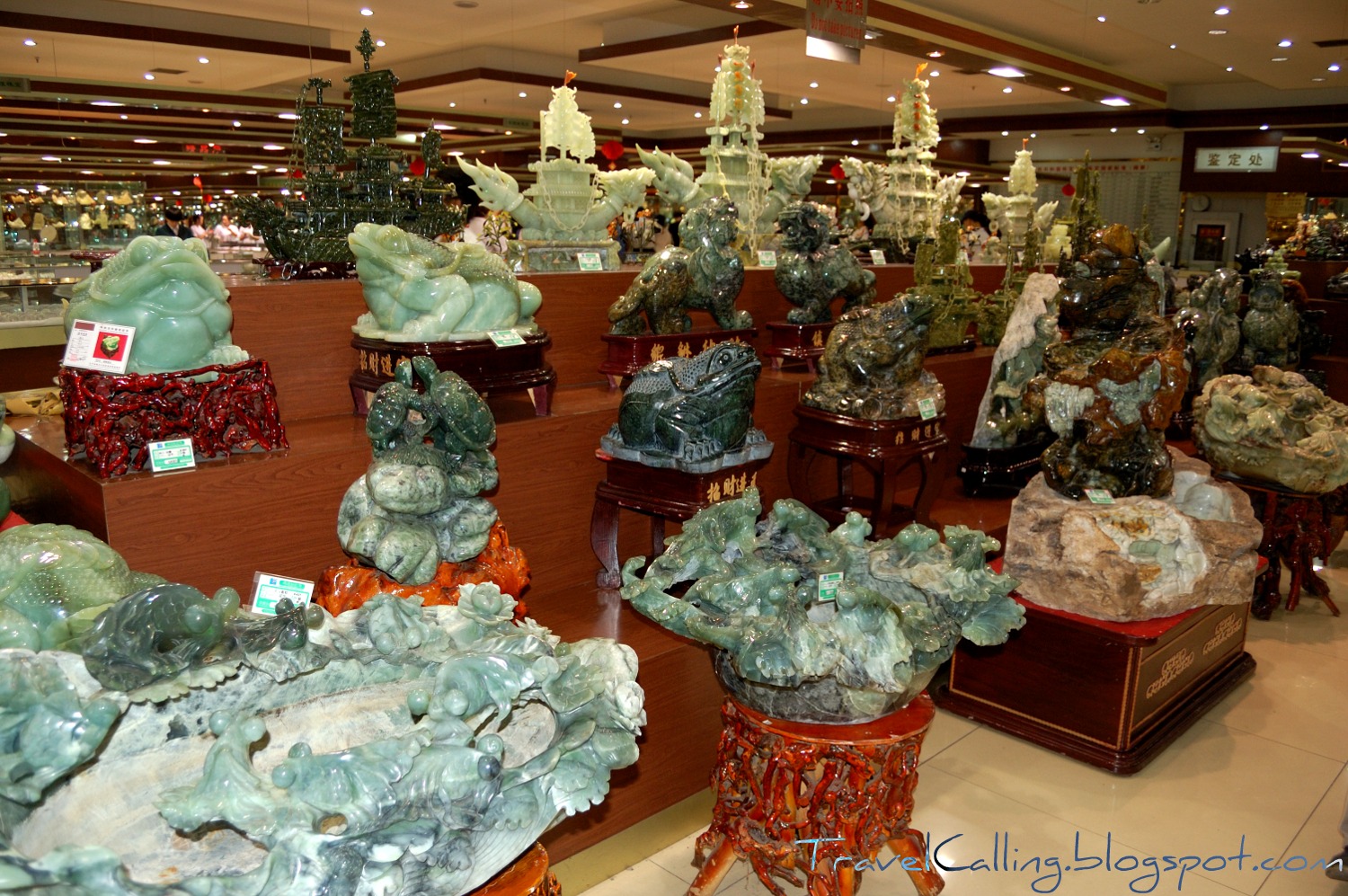
In Changling, we have visited the burial mausoleum of Chengzu, Zhu Di (third emperor of the Ming Dinasty) and empress Xushi, with annexed a museum displaying ancient imperial Chinese tools and jewellery. To stay within the jewellery topic, afterwards we headed to the state-run jade factory, where they work (and sell) all kinds of Chinese jade.

After the jade factory was the turn of Chinese medicine. Or better, a wellbeing-sort-of-spa centre where we were introduced to the fascinating world of natural remedies. Apart from the too touristy atmosphere, the group was starting to get impatient about the Great Wall that, in the itinerary, was left as the last part.

Finally, we made it, more than an hour drive from Beijing, through a mental summer holiday traffic, we got to the Wall. Needless to say, the view started striking all of us since far away, and every time we saw a "piece" of it, the bus echoed of our "Oooohhhh".

The heat was stifling, and the massive crowd didn't help face the long walk that was awaiting us. We started climbing huge stone steps and steep uphill paths literally pushing our way with the elbows.

There is not one single best viewpoint, it's a gradual achievement, and staring at that overwhelming landscape from the Great Wall nonetheless, makes the exhausting route all the way worthwhile.

Our guide gave us instructions on how to go back but didn't come with the group, so after we reached our top spot and were starting the descent, we followed the crowd towards the exit. While we were facing the hard way back, the first signs that something was out of place started showing up.

Then, we realised we hadn't seen the little train we used to get to the entrance of the wall, that was supposed to bring us back down since we had a return ticket.

We kept going and immediately after the exit something felt unavoidably wrong. Much more quiet than what we had found when we had arrived, slightly different people, a soft-looking camel posing for tourist pictures and, more importantly, our bus was not there anymore.

It took us a while to understand it, but connecting all the dots, the truth was inescapable: we had ended up in Mongolia. Inner Mongolia, to be precise.

Originally, with my parents we had planned to go to Mongolia, but of course organising the trip, not "by mistake".

It has been an exhausting walk, the descent was double-length of the way up because we couldn't find the train that spared us half of the trip at the beginning; the heat was unbearable, the path bristled with pitfalls, such as small stones making it dangerously slippery.

As if this wasn't enough, once outside, before understanding where we were, we kept looking in vain for our bus. Finally, we had the epiphany, we found the phone number of our guide through her office and she told the taxi driver where was the bus (oh, because of course none of us spoke Chinese and we were unable to explain it ourselves).

After a huge traffic in the pass between Mongolia and China, we got to our bus, tired and annoyed for the unexpected extra-walk, but suspecting already our adventure would have become source of jokes for long time in the future.

Settling in Shanghai, easier said than done

After a couple of posts covering the quirky aspects of my stay in Shanghai, time has come to release the truth: it's not all that fun.

First of all, ni hao everybody, as this is one of the very few Chinese words I managed to grasp before starting the course.

When I've arrived in China, end of July, I took all August as a holiday-adjustment to the new reality, and although it's been great traveling to Beijing and Qingdao and exploring Shanghai itself, the first signs of what I was going to face shortly had started showing up.

First and foremost, the biggest barrier was (and is) the language. Not just because Chinese is very difficult, but also because nobody speaks English. Or French, or Italian, or Spanish, or Portuguese, for that matter.

I agree that I am the foreigner, meaning that I have to adapt, and locals don't have to feel compelled to study another language just to make tourists or expats feel at home. Also true is that in Italy is not that common to find locals with a proficient level of English either, except in very touristy areas, but this applies to Shanghai too. 

What is the problem of not being confident in Chinese? For a Westerner like me, used to completely different writing characters, is impossible even to look up in the dictionary when in need to translate Chinese to English.

Going shopping for food is still a disaster: there is literally everything on sale, some things I have never seen before, and names and descriptions are only in Chinese, making it impossible for me to buy them. Admittedly, with my great regret as I'm quite open-minded food-wise and I love trying anything new. Well, almost anything.

If you are wondering about the public transport, yes, the metro (very well organised, 13 lines that reach pretty much every corner of the city) is bilingual, meaning that the stops are written also with English characters, but the workers are still monolingual.

The linguistic hindrance entails much more than just grocery shopping, of course. A couple of examples? Getting the mail, understanding the bills, reading building announcements and block rules. Or answering to the lady who came to read the business gas metres and ask for the money missing from last bill.

All these difficulties notwithstanding, I have always had the impression that life in China is made very easy, little hassle and relaxed.

I am now on my third day of Chinese class, tomorrow will be the fourth one, and I already know several words, I can make sentences just swaping the terms and changing their order and, most of all, I can do all this also by writing with Chinese characters.

This does require every-day after-class review and studying at home, but it's way less difficult than I had ever thought. After a month and a half of China, and almost two weeks living by myself in my own place, the initial frustration is gradually giving way to a greater appreciation of a totally new lifestyle (it is what I was looking for, isn't it?), discovering unknown social mores and small idiosyncrasies that make the Sleeping Dragon an invaluable mix of tradition and modernity.

"It is time to stop dreaming your life and start living your dreams" - Book Review "The Art of Solo Travel"

"It is time to stop dreaming your life and start living your dreams": this is the philosophie behind Stephanie Lee's new book "The Art of Solo Travel - A Girls' Guide". This is not just a guide for solo female travelers, but an invaluable source of practical tips on how to manage a small budget on the road and on how to appreciate your time abroad by yourself.

I've been travelling alone for most of the time. After living for seven years in Rome, I moved to Ireland in 2005, and relocated to London in 2007. Now I'm about to start a new journey: I'll be moving to Shanghai in July, again by myself.

Admittedly, I have had times when I wished to have a travel companion, and when I felt tired to be always alone on the road, but then, this book came along and I started re-thinking the whole issue over. Besides, I reckon I'm not an easy travel companion if someone just wants to go on holiday, I pursue the constant quest for the unknown, and this might lead my friends not to tolerate me anymore.

The author makes it clear for the reader from the first page: "If you are reading this, you are not the average girl". She's right, solo women travellers are (and must be) fiercely independent, determined, stubborn.

The best thing of this book is that it's "true". Stephanie doesn't lose herself on unrealistic hyperboles: travelling and travelling solo are great experiences, but they also have their difficulties, and travellers must pay attention to details.

Furthermore, women travelling solo are, or appear, more vulnerable, and when unwanted attentions come about travellers inevitably feel uncomfortable. When all due precautions are taken, I agree with Stephanie when she says "solo travelers experience a more intimate relationship with their destinations".

The book has had a soothing effect on me, helping me not feel lonely the very moment I'm about to leave friends and family all over again.

When having a local guide becomes vital

I have always believed that a foreign country is best experienced with the help of local guides. By "guide" I don't mean necessarily tour operators - if you are lucky enough to have friends living in that foreign country, problem is solved.

In general, I think a local guide is important because they will help travelers dig deeper into a foreign society, avoiding them possible time-wasting in the lookout for the most worthwhile spots, especially in the case of a short trip.

However, sometimes contacting a local guide becomes "mandatory". My previous post (I know, long time ago, apologies, I've been busy writing) was about my trekking weekend in Europe's deepest canyon gorge, Su Gorroppu, in Sardinia's Supramonte. I went trekking, and I had my local guide. With "local" here I mean a guy who lives in Dorgali, a town near Su Gorroppu, and who's been going to the canyon since he was a child.

I'm from Sardinia myself, and I would never try to go there alone. Apparently, though, some dare. And get lost. Now, getting lost in a city is not a big deal. Getting lost in Supramonte *is* a major deal.

In the regional newspaper, L'Unione Sarda, I read an article which has a hilarious twist. Well, hilarious for who doesn't have anything to do with it. A while ago, the local rescue team (usually the local guides I've contacted myself) went to Su Gorroppu to look for a tourist (from Sardinia) who got lost and was never found, since December 27th. While looking for him, the rescuers found, by a very fortunate incident, a Japanese tourist who lost his way and couldn't manage to call for help. In some areas in the mountains, there's no mobile coverage.

Last week, the same rescue team was called again - it seems like these guys work during the day to bring tourists down the canyon and during the night to look for the "independent" ones.
Anyhow, they were asked to find two German tourists and they found three: one had been wandering about, lost, for two days and nobody knew about it.

Arriving close to the mountains, from the highway, the effect is one of astonishment: those massive rocks command the view. I'm usually more a "sea-person", but that landscape was truly overwhelming, so I can understand that for mountain-lovers it's a challenge not to be missed.

However, the best advice I can give, is to pay extra attention not only in these mountains in Sardinia, but in general, every time travelers want to undertake similar adventurous trips.

In Sardinia, walking down Europe's deepest canyon


Su Gorroppu, Dorgali

I had been warned it was tough, but in line with Sardinian stubbornness, I challenged my out-of-shapeness and made my way to Europe's deepest canyon, Su Gorroppu, near Dorgali, Sardinia's eastern coast.

The deal involved parking our car (after a drive along the very edge of a steep cliff) 200 mt above the gorge of the canyon and walking down towards the valley. "It cannot be that difficult," I thought. It didn't take me long to change my mind.

From second one, I had to mind every single step in order to avoid slipping down the cliff. The path bristled with small rolling stones that made it slippery, and bigger boulders that only apparently were stuck in the ground but that actually rolled too. And even the ones that were stuck were slippery because too worn out, for that matter.

The walk started quietly, the members of my group very interested in our guides' explanations, but after a while, all our geologic interest was inevitably fading away. We were too concentrated on placing our feet on the right stones.

The view was overwhelming, every time I looked in front of me I couldn't help but thinking how small man-made wonders are compared to what nature has done.

Being naturally rich in wood, also valuable species such as juniper, the mountains have been the target of former Italian royal family, the Savoia, who, when they colonised the island creating the Sardo-Piedmont kingdom, started a real sack, exploiting the natives and destroying the forests to obtain wood, coal and scented ashes for the houses. Thousands of trees have been cut down, burnt and loaded to the ships on the way to Piedmont. The result has been a huge damage for the environment (and for the local population), and only now little by little the forest is beginning to come back to normal.

In particularly difficult spots, I started cursing myself for having chosen this excursion instead of some other great places Sardinia is full of, and certainly less dangerous. No matter what, I kept shooting, in the hope to come out at least with some good pictures. I saw the woman behind me looking puzzled: "I admire your willingness on photographing!" She told me, sweating.

The route was actually hard, full of trees (the only handhold I could rely on), and very narrow, so we asked our guides: "What if someone gets his ankle sprained?" "No helicopter nor ambulance can manage to get here," was the guides pithy answer. "We leave the weak here, wildlife have the right to eat too!" Drowsy laugh from the rest of the group.

The moments I was getting despondent, I threatened: "That's it, I'm not moving anymore!" Bad choice, really not the case to get lost in the middle of nowhere, I wouldn't have been able to find my way back to the car, I had to keep going, no way out.

Once reached the destination, my fury calmed down, being on the bottom of the canyon was worth our fatigue, and our courage was restored. Good for us, because we were about to do uphill the same route we had just descended from.

I kept shaking all evening, my mood having ranged from panic to discouragement all day. I swore I would never go back again: the day after I had already changed my mind and started planning the next excursion.

Eight enchanting villages in Provence

Adjacent to Italian World Heritage site Le Cinque Terre, and blessed by mild Mediterranean temperatures, the southern French region of Provence is one of the most glamorous holiday destinations among European travelers. Under the administration of Provence-Alpes-Côte d'Azur, the region's name dates back to Roman times when it was conquered and made it a Roman province (Provincia). Historic sites and quirky traditions are around every corner, and the landscapes of dramatic cliffs, wiggly waterways and wild mountains are overwhelming.

Authentic provençal life and traditions are best experienced in the region's quirky little villages scattered all throughout its territory. Perched hamlets, ruined castles and deserted country lanes form the mysterious soul of the provençal area of Vaucluse, and many colorful local markets adds to liveliness.

The closest international airport is Marseille, but the best town to stay and from which to organize excursions is Avignon, being almost equidistant from all Vaucluse villages. Known as the City of the Popes due to the relocation of the Holy See from the Vatican between 1309 and 1377, Avignon is today a vibrant cultural town in the heart of one of the most seductive regions of France.

Being based in Avignon also gives the opportunity to visit its main heritage sites such as the Papal Palace (Palais des Papes) and the cathedral Notre Dame des Doms, and wander along its medieval streets and the famous Avignon Bridge, that offers a stunning view of the Rhône River.

Although Provence is a highly touristic area, buses are not as frequent as one might think and the easiest way to get around is by renting a car. For bus routes and fares, the best website to check is compiled by the Department of Vaucluse.

Cavaillon

Nestled in the valley between the Luberon mount and the hill of Saint Jacques, Cavaillon is a quiet picturesque town in the heart of sunny Provence, in southern France. Lively both day and night, Cavaillon has something for everybody. Wandering the town's streets travelers can slowly discover its history, traditions, colors and tastes, while climbing the hill of Saint Jacques the unfolding panorama will comprise the whole Cavaillon, the river Coulon and the Luberon mount opposite.

Along the town's main roads, such as Cours Bournissac, Rue de la République and Cours Léon Gambetta, are lined up tantalizing little shops displaying colorful local products such as lavender honey and typical cakes and breads, and fruits marmalade. On the cultural side, an ancient Synagogue and the old Cathedral lead visitors through Cavaillon's ancient communities and lost mores.

Cavaillon is about forty minutes car drive from Avignon and an hour by bus. There are coaches departing from Avignon central station Gare Routière to Cavaillon station about every two hours, and the latest departure from Cavaillon back to Avignon is around 6,30pm. Ticket prices range from 1,50€ to 3€.

Gordes

Gordes strikes you before you actually arrive to town. Listed among the most beautiful villages in France, it offers breathtaking views from both outside and inside its walls. The little country lane that leads towards this perched village is full of tourists who stop in the middle of the road to take their best shots of the awe-inspiring castle and cathedral that command the view.

More than just a village, Gordes looks like a sculpture that comes naturally out of a huge rock, almost a natural wonder, rather than a man-made cluster of buildings. A stroll up and down its narrow cobbled lanes gives a unique perspective on medieval French architecture, to fully enjoy by visiting colorful local markets and traditional festivals.

There are no buses departing from Avignon to Gordes, and due to its position perched on a cliff and the possibility of taking great photos, the best option is to rent a car. Avignon is about forty-five minutes drive from Gordes.

Village des Bories

Part of Gordes' municipality, the Village des Bories strongly reminds of a ghost town. The very origins of the bories, cone-shaped stone huts, date back to the Bronze Age, while for the village itself historians are debating over its inception, to be situated somewhere between the 7th and the 15th century.

Although no longer inhabited, it is certain that finds such as working tools and pottery, date back to the 18th century, and the most recent architectural changes to as little as the 19th century. It completes the fascinating journey through French dry stone history a short exhibition of photos taken all over the world showing that similar stone dwellings and villages can be found in many countries, from the Italian regions of Sardinia and Puglia, to California, to Turkey.

Lacoste

Epitome of inaccessibility, this perched village in the heart of Provence was once the beloved residence of the infamous Marquis De Sade, where he lived his most scandalous and libertine days, and wrote his blasphemous books against the Catholic Church, provoking the fury of the clergy.

After several short imprisonments, he was exiled in his Lacoste castle in 1768. Restored by the French fashion designer Pierre Cardin, the castle is not open to visitors, who can only admire its ruined external facade commanding the view on the countryside. The austere building looms over the village that lies in layers on the hill slopes.

Modest signs point towards the Atélier de Création and the Savannah College of Art and Design, reason why it's not unusual meeting English speaking students strolling along Lacoste cobbled alleys.
There are no buses from Avignon to Lacoste, and with the car it will take around half an hour to arrive.

L'Isle sur la Sorgue

Commonly called l'Isle by the region's inhabitants, this village is spread out along the banks of the river Sorgue, from which it derives its name “the island on the Sorgue”. Very lively summer and winter alike, the town organizes every Thursday and Sunday a thriving show of delicacies coming from local farms. Boasting huge sectors devoted to all possible spices, jams, cheeses and flowers, l'Isle sur la Sorgue has the power to make even grocery shopping a pleasant activity.

While along the river it's a cluster of cafés, pubs, ice cream shops and restaurants, moving a little towards the city center it's possible to discover how the ancient town has been greatly preserved on the top of the buildings: if the bottom floors have been used as shops or public places, the council has decided to keep the town's traditional look on the top floors, combining picturesque leisure time with genuinely old-fashioned style.

L'Isle is about twenty-five minutes drive from Avignon, and about forty minutes by coach. The buses from Avignon are about every two hours, being the latest way back around 6pm. Ticket prices range from 1,50€ to 3€.

Roussillon

Also known as the “red village”, Roussillon is an adored holiday destination for in-the-know European travelers. The blazing red color of its cliffs and the ochre hues of its quarries give the town a warm look under the blue Provencal sky.

Surrounded by the other picturesque villages that contribute to evoke the charm of this French region, Roussillon has bedazzled many artists and is a thriving resource of art galleries and traditional craftspeople. A stroll around its narrow alleys is the perfect way to capture the essence of this little town, and an outing on its red canyon makes it for an otherworldly experience in southern France.

There are no buses from Avignon to Roussillon, and changing in Cavaillon could mean waste half a day between waiting and traveling. A car drive is best option and it will take less than an hour.

Châteauneuf-du-Pape

Maintaining the regional style of narrow cobbled lanes, Châteauneuf-du-Pape is renowned for the excellence of its wines. Red, white, rosé, visitors can enjoy a stroll about this medieval picturesque town by dawdling along its streets dotted with tiny caves. Friendly and cosy, caves are the soul and the claim to fame of Châteauneuf-du-Pape, where the wine tradition was brought in by the popes who had relocated the papacy in Avignon in 1309.

The village, previously called Châteauneuf Calcernier, derives its current name by the castle built by pope John XXII in the 14th century, but officially acquired in 1893 in honor of the widespread circulation of the wines commonly known as Châteaneuf-du-Pape. It completes the excursion a stunning view of the countryside that surrounds the village.

From Avignon to Châteauneuf-du-Pape there is only one bus a day. A car drive takes around fifteen minutes.

Fontaine de Vaucluse

In line with the trend of neighboring villages, also the town of Fontaine de Vaucluse proudly boasts having been a source of inspiration for many writers such as Italian poet Francesco Petrarca who wrote masterpieces such as Chiare, fresche e dolci acque, to celebrate her beloved Laura from the source of river Sorgue.

Nestled in the middle of a lush vegetation and with the river stretched out along its main road, Fontaine has been built around this source of water gushing up out of the ground and making the surroundings glow with iridescent hues. Like many of other provençal towns, also Fontaine houses beautifully preserved and very interesting museums, such as the one about traditional paper-making located where was the paper mill, once the main economic resource, and the Musée Appel de la Liberté about history and daily life in France and Provence during WWII.

Fontaine de Vaucluse is about thirty minutes drive from Avignon, and forty-five minutes by coach. The buses from Avignon are about every two hours, being the latest way back around 5,45pm. Ticket prices range from 1,50€ to 3€. Buy your travel money before you travel to get great deals on currency exchange rates.

This article first appeared in France Travel Guide.
 
Copyright © Beach Blog. All Rights Reserved.
Blogger Template designed by Big Homes.